

I led the product and design strategy that transformed Journey from static health content into an AI-informed, action-first system. By redesigning inputs, surfacing real-time interventions, and making progress visible, we boosted engagement, improved completion rates, and delivered scalable value for both members and enterprise clients.
Defining the product and design strategy for meaningful health engagement
As VP of Design, I led the team responsible for transforming Journey, League’s engagement layer, into a scalable, AI-informed system that helped members take meaningful action in their health. This was not just a design challenge but a strategic shift: evolving from static, content-heavy experiences to an action-first model that connected real-time inputs with timely interventions that drove users to better care decision-making..
Our goal was simple but ambitious: make behavior change more actionable, personalized, and scalable, both for members and enterprise clients.
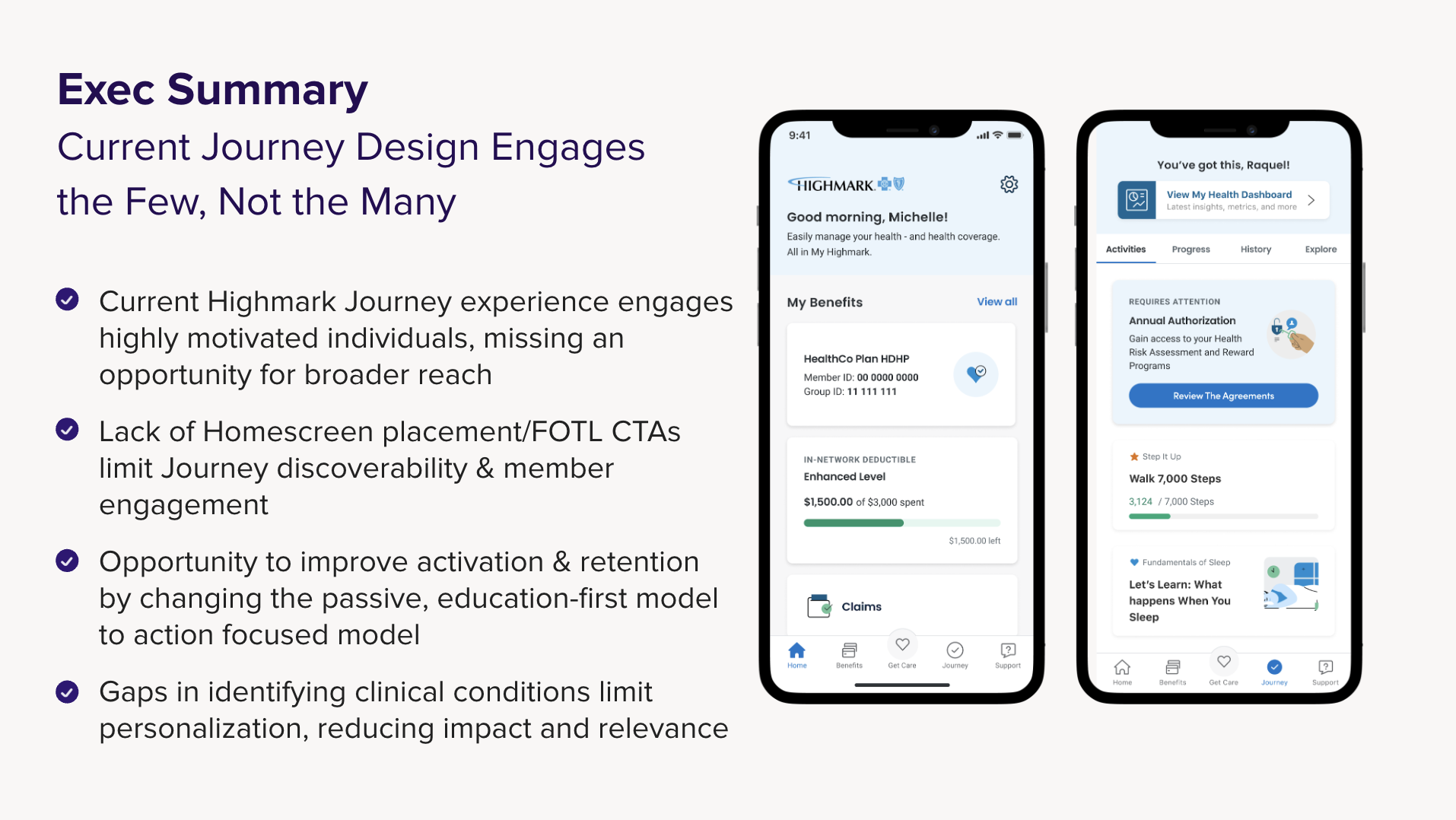
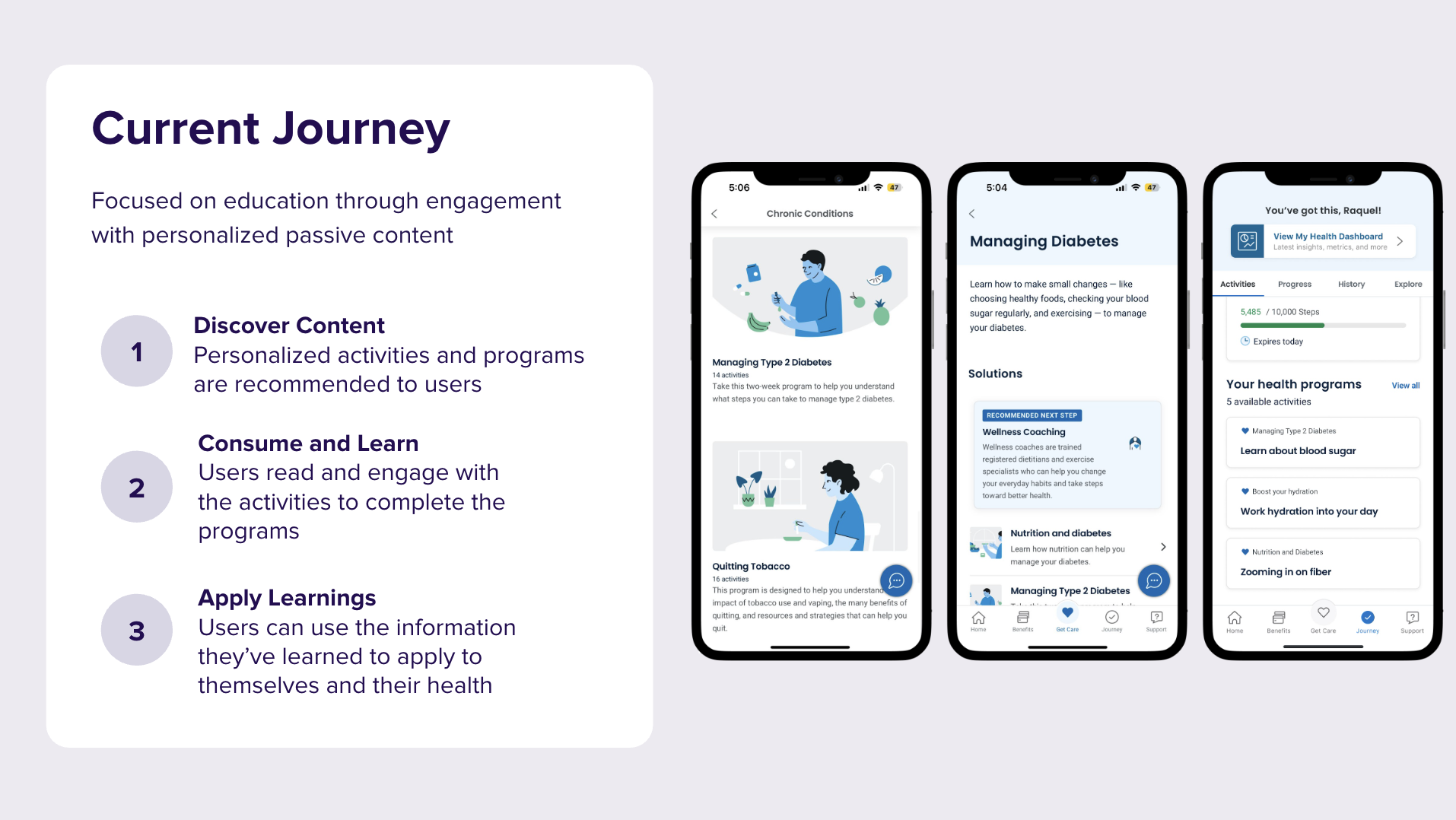
Before Journey, behavior tools were built in silos, often customized client by client. The result:
Fragmented design strategies with little re-use
Limited or missing personalization
Slow, expensive implementations
User flows that lacked clarity, context, or purpose
The experience was more about reading and watching than doing. We needed to change that.
I guided the team through a strategic redesign of Journey around three pillars:
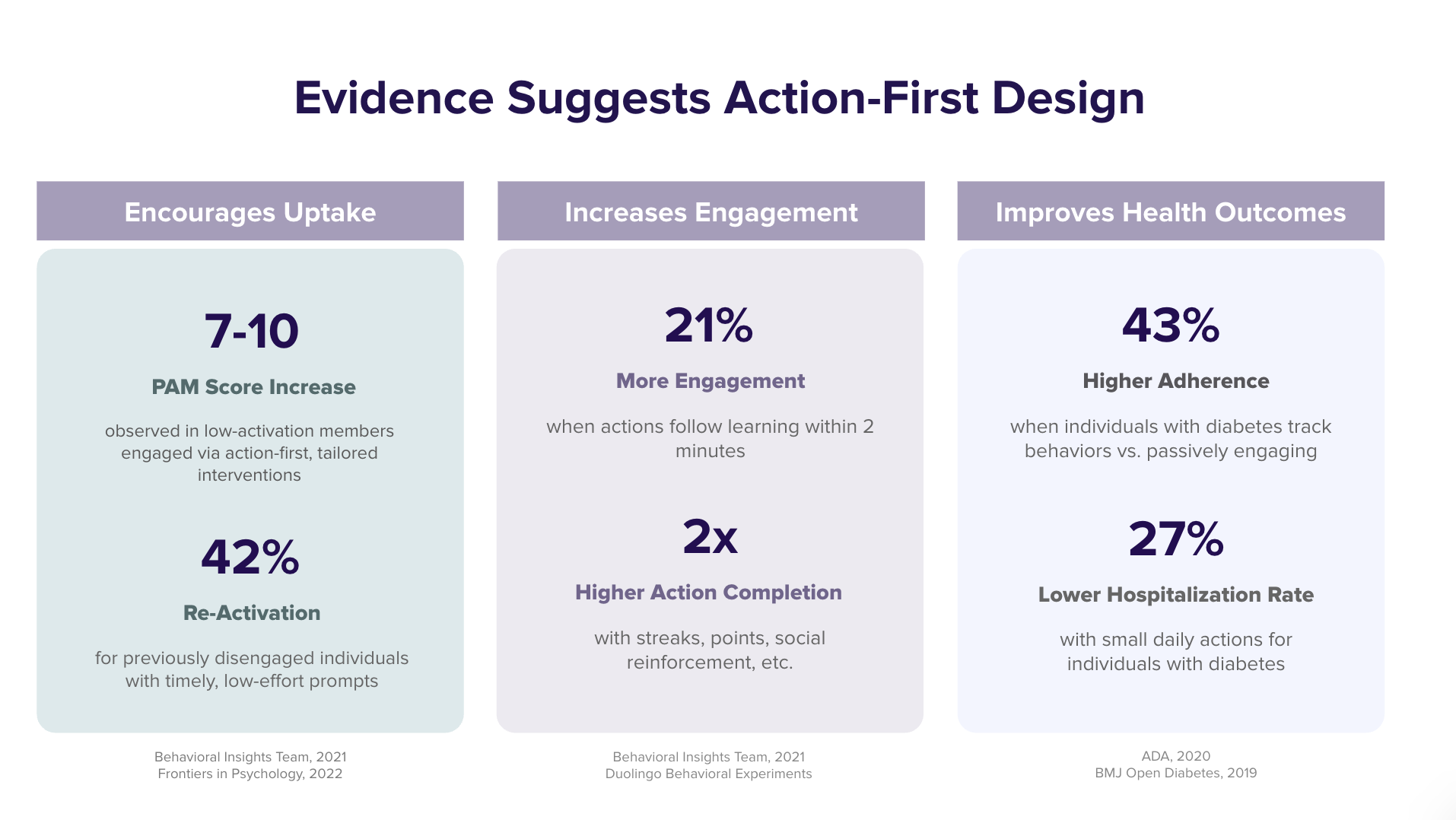
Action-First Design
Shifted from passive content (articles, videos) to guided steps with clear outcomes.
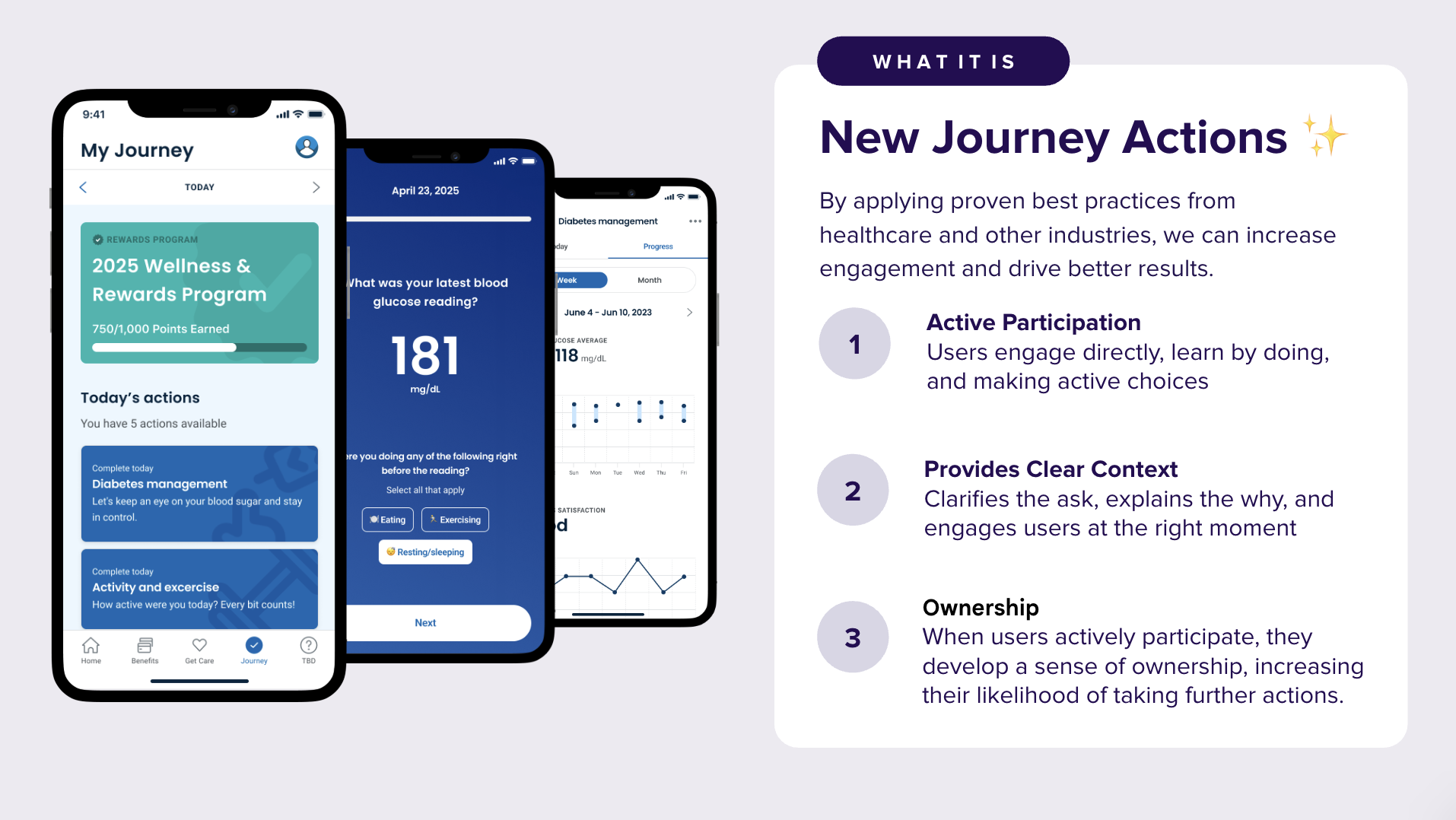
Inspired by behavior change leaders like Noom, we introduced targeted prompts like tracking glucose or setting a nutrition target, making action the centerpiece.
Input That Drives Progress
Redefined data entry so every response tied back to a member’s goal.
Designed input as a forward-moving step (symptoms, care preferences, progress tracking) rather than a static form.
This gave users visibility into how their answers shaped their journey.
Responsive Interventions
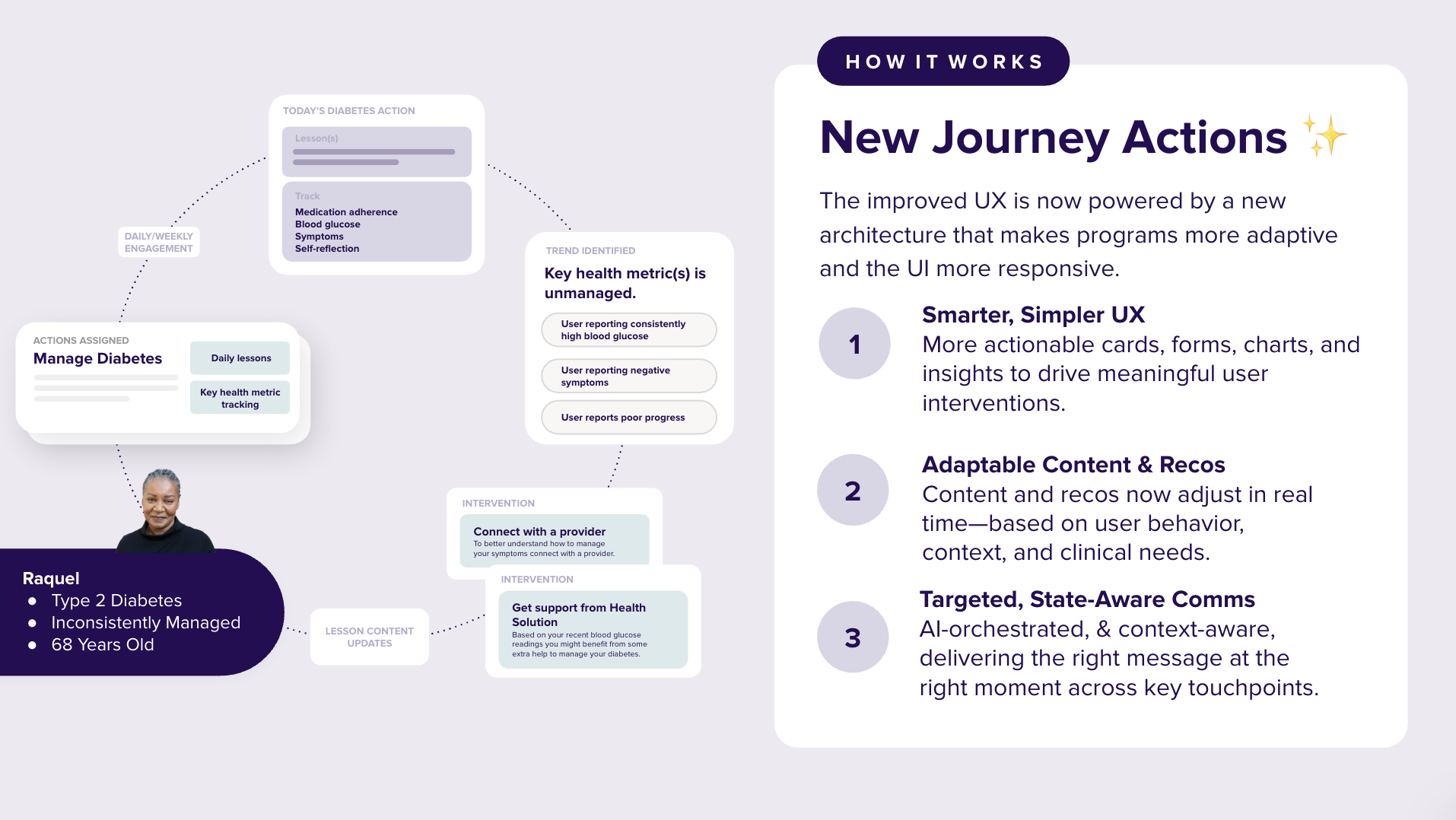
Introduced Journey Actions with personalized, real-time Interventions.
If progress stalled or a member reported a struggle, the system surfaced timely support, ike a new program or employer-sponsored resource.
This created an experience that was more dynamic, empathetic, and supportive.
Research & Strategy: Partnered with Design and Research leaders to understand engagement data, create interview frameworks, and capture internal and external client feedback. Together, we built archetypes and goal-based personas to guide design.
Cross-Functional Alignment: Guided the creation of workshops with product, design, and engineering to align priorities and ensure feasibility.
Prototyping & Testing: Directed design in rapid prototyping, iterating with usability testing and client readouts to refine both the member experience and employer-facing value.
Promotion & Enablement: Worked with execs to shape messaging and create assets that supported external sales.
As VP, I:
Defined the product and design strategy for Journey’s transformation.
Provided market lens for research, helping to inform the frameworks that guided the team’s decisions.
Balanced long-term vision with near-term delivery alongside Eng and Product leaders.
Engaged clients in design reviews to align the product roadmap with market needs.
Championed the shift from content-first to action-first, ensuring the design org worked hand-in-hand with product and engineering to deliver an impactful solution.
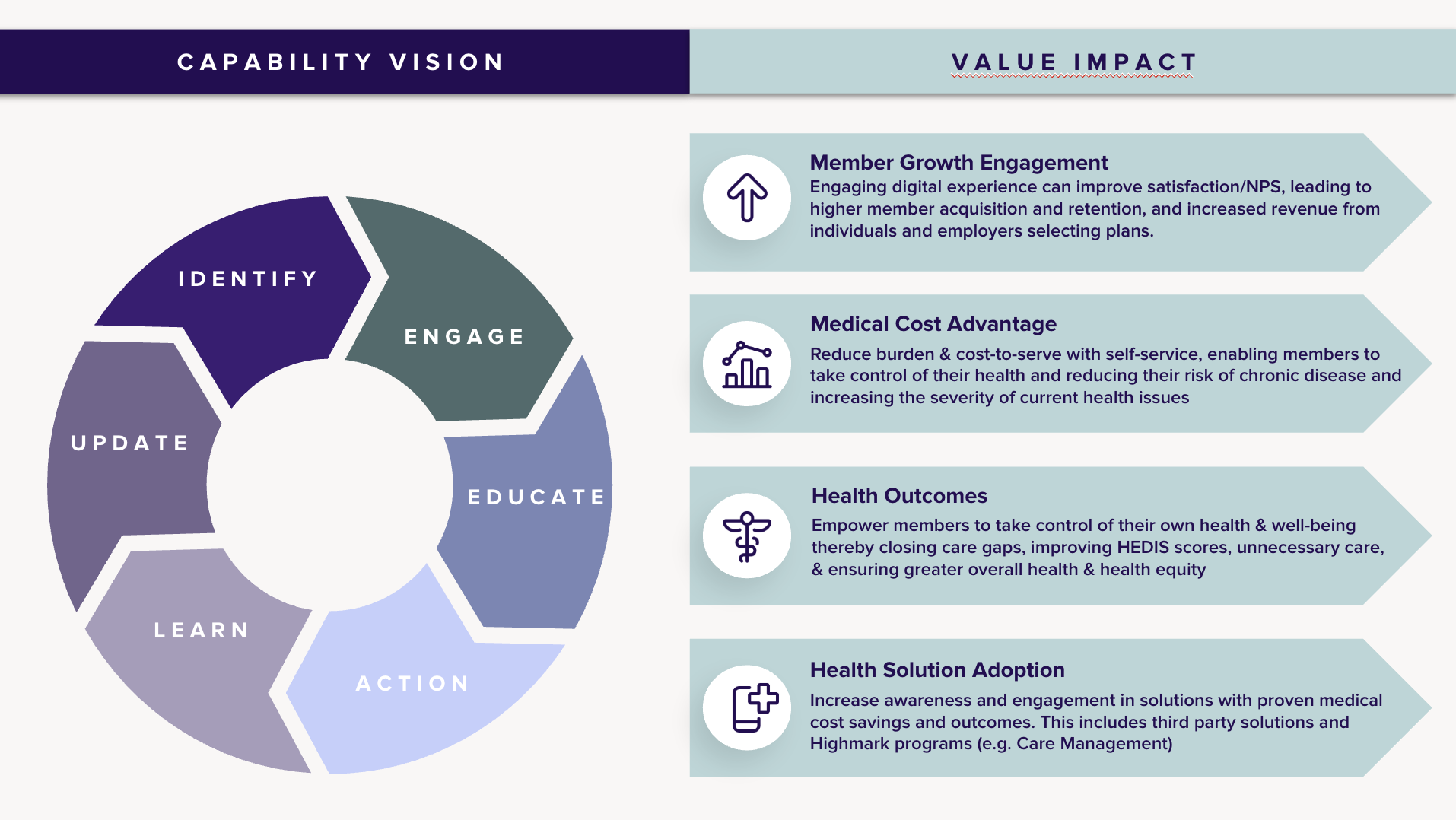
This work reshaped how our platform supports behavior change:
📈 Higher engagement: Members interacted more with behavior-change steps when guided through actions.
🎯 Improved completion rates: Flows like care navigation and goal tracking saw measurable lift.
⏱️ Relevant support in real time: Interventions surfaced timely, personalized resources.
💼 Enterprise value: Clients saw stronger ROI through targeted delivery of sponsored programs.
🧩 Scalable framework: Journey became a modular system—reducing cost, accelerating deployment, and creating consistency across clients.
This project marked a turning point for League’s platform. By uniting product and design strategy around actions, inputs, and personalization, we shifted the role of engagement from something members read to something they lived.